By Head of School Allison Webster
One of the many highlights of our recent Grade 1 class play was when one of the first-grade teachers came beeping and crashing through the audience, a box around her serving as her “car” and the narrow aisles of the Lowell Center serving as Boston’s Storrow Drive. She beeped and spun, delighting the audience, keeping her iced Dunkin’ level while steering out of the room. The audience erupted in appreciation, and I felt so grateful for the ways in which our students are immersed in a playful environment at DCD.
At DCD, we are serious about offering our students skills they’ll use for a lifetime, and mindsets that will serve as the foundation for their future— work that is best served by the spirit of play that permeates our school. Play takes many forms at DCD— from competitive sports matches to unstructured recess, from playful academic exercises to the humor and playfulness of our faculty and staff.
What are some of the forms play takes on campus?
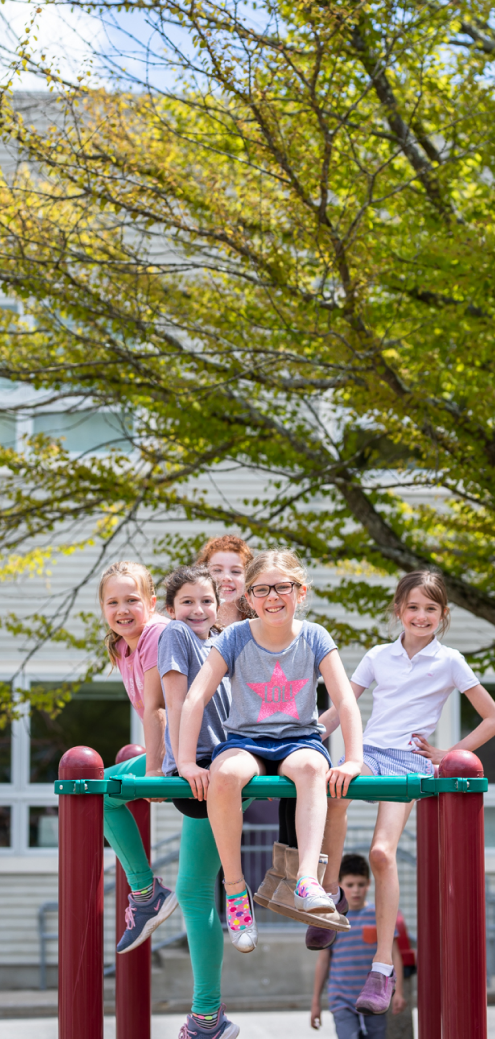
Active, Physical Play: Stop by DCD’s 20-acre campus any day of the week, and you’ll witness one of the most ubiquitous forms of play, as students enjoy two recesses each day, along with a robust physical education and athletics program. From the structure of a baseball game in PE to the wild and unregulated whims of recess, the benefits of these opportunities for physical play are obvious. Aside from better health and athletic skills, students learn teamwork, persistence, and problem-solving in ways they never could within the confines of a classroom.
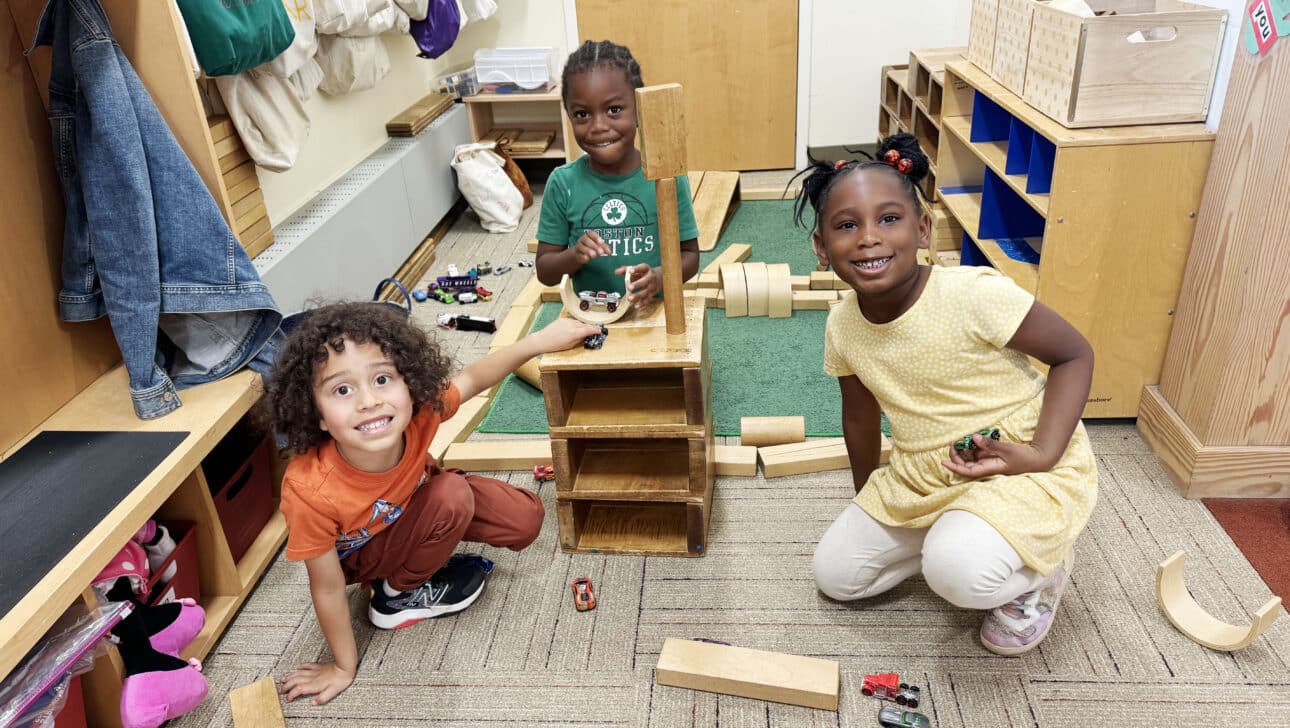
Imaginative Play: When our Pre-K and Kindergarten students engage in the creative play areas of their classrooms, they take on the perspective of a doctor, a firefighter— or a unicorn veterinarian. Wrapped entirely in the trappings of their imaginations, these games allow exploration, collaboration, and social development, as students work together in their creative tasks. At every grade level, students also perform a class play, using imagination and improvisation to animate their roles. By conjuring these imaginative roles, students practice stepping outside themselves, and seeing the world through the eyes of another.
Cognitive Play: Play is not only found outside the classroom— it has a place in even the most grounded of subjects. Math games, for example, engage students in competition while also encouraging them to think flexibly. Playful humanities projects, like a student-designed card game about Romeo and Juliet, allow students to demonstrate their understanding in playful ways. All curricular areas, from arts to history to math, are taught in a way that encourages student creativity and flexibility in playful ways. Even the humor and playful banter of an everyday exchange between students, especially in our Middle School, helps to develop in students the flexibility, abstract thinking, and creativity we know they’ll need to thrive as adults.
What are some of the benefits of play?
Flexibility: Playfulness in childhood helps develop a flexible, open, growth-oriented mindset that continues into adulthood. As the pace of change accelerates in our world, we know the ability to think flexibly and nimbly is a key adult skill, and is something unlocked and encouraged by the many opportunities for play.
Resilience: Play also gives students lots of practice with failure, building up their ability to persist, try new ideas, and learn from mistakes. Whether designing a ceramic sculpture in an art elective or trying to figure out the guitar riff for Sweet Child of Mine, students learn resilience through their playful endeavors.
Risk Taking: Much play involves risk, and the ability to calculate and take risks is a key leadership skill. This can be seen on the playing field and in the intellectual risks students take in the classroom as they develop their ideas and share their work.
Executive Function Skills: Research from the Harvard Center on the Developing Child has shown that children who engage in complex, imaginative play develop stronger executive function than peers who don’t. Watching students play the basketball-based game Knockout at recess, it is easy to see them negotiate rules, exercise self-control, and follow a sequence— all elements of the executive function skills we strive to impart to each student.
But perhaps most importantly, we know that our students will lead happier, more productive lives if we instill in them a sense of play. Even small moments of playfulness do a lot to inoculate our students against the challenges of building an adult life, and instill in them a joyful undercurrent that can help to animate their lives.
In the Things app, I keep an electronic “to do” list, and one day, one of our daughters added an item to the “Someday” folder that I never have the heart to check as complete. It says, “Go to a monkey petting zoo. A monkey breeder is also good.” While I’d love to check off every task on my list, this one remains, since it puts a smile on my face and reminds me that in spite of all of the tasks we need to complete in life, they’ll be best accomplished with a spirit of play. I’m grateful to spend my days at DCD, where our curriculum, people, and Pre-K-8 structure all give students the playfulness and playful approach they will need to thrive.