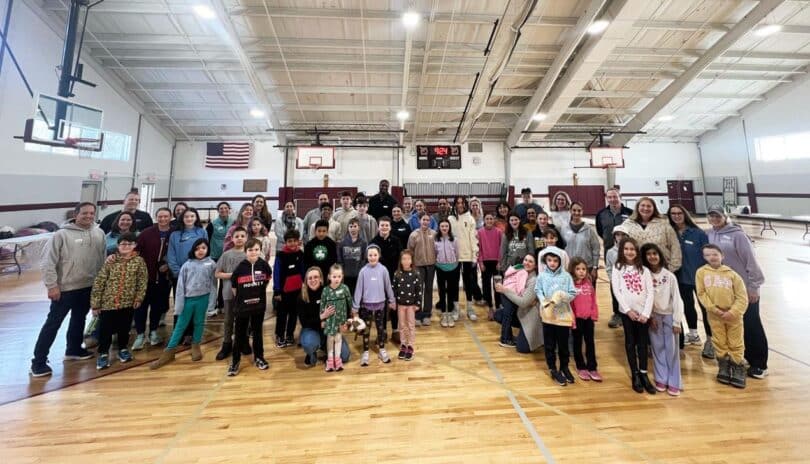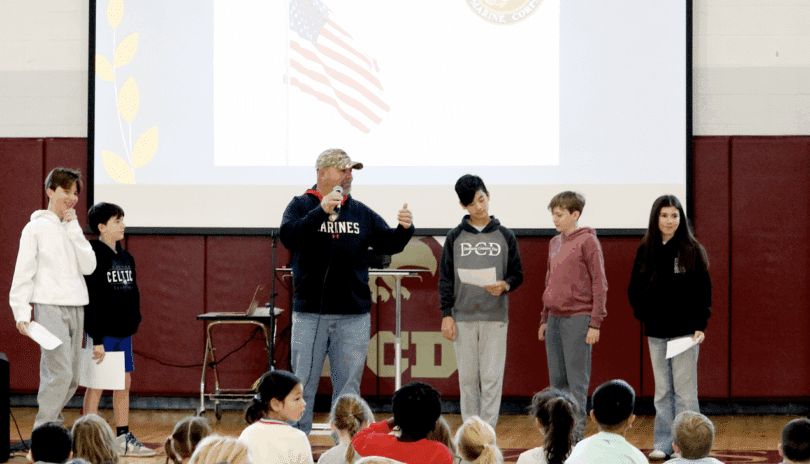
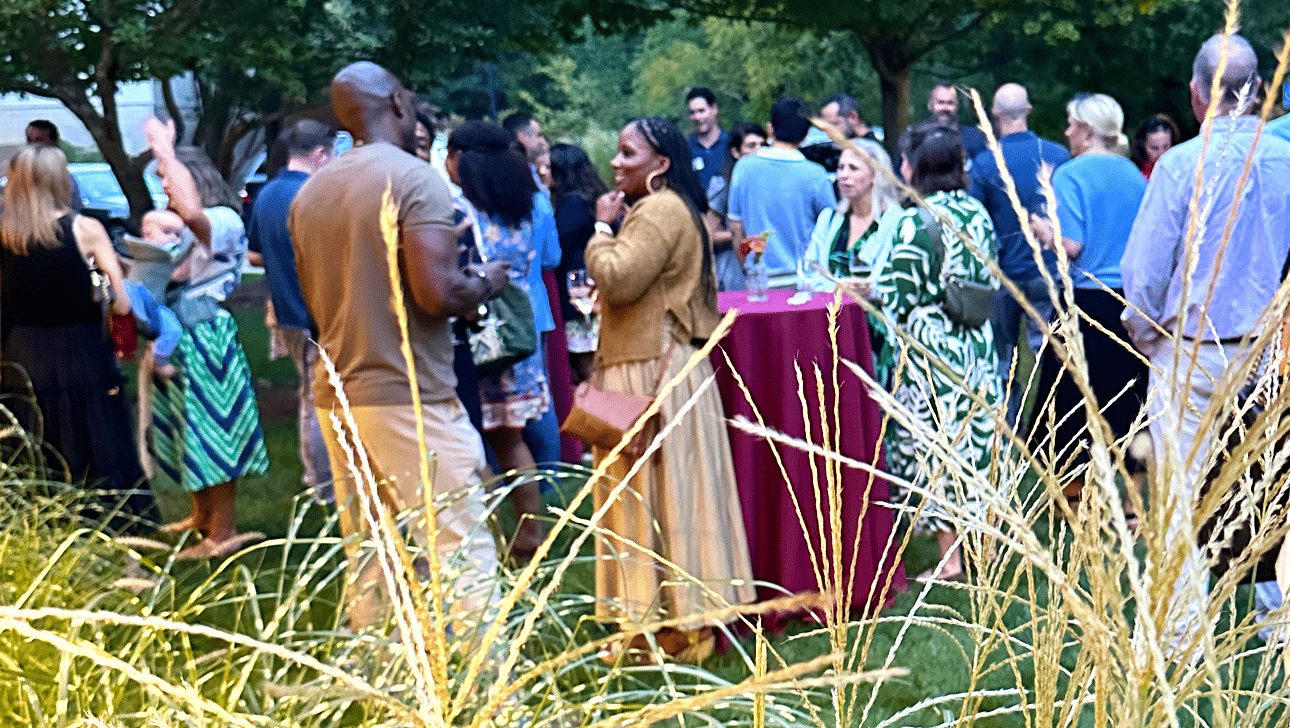
Welcome to the DCD family! Thank you to everyone who joined us for the 2026–2027 New Parent Dinner on Thursday, Sept. 17. This annual tradition invites new parents and caregivers, board members, and school leaders to gather and celebrate the start of this exciting new chapter over cocktails and dinner. Please enjoy the following welcome and remarks shared by Head of School Allison Webster during the event:
Tonight’s a night to connect with each other—and to continue to deepen your understanding of our school. Eleven years ago, when I was new to DCD, there was one particular aspect of our school and community that stood out to me—and I want to share more about that with you tonight.
I want to do so by talking about one of our country’s celebrated researchers, Angela Duckworth. She won a MacArthur Genius Award—and she’s spent the past decade developing a perspective DCD has held for nearly 125 years. I have followed her research since she was my statistics professor at the University of Pennsylvania, when I went there for a degree in Positive Psychology after years working as a teacher and administrator.
When I came to DCD over a decade ago, I was delighted—and surprised—to find that DCD’s culture and community felt different to me than what I had experienced in the earlier part of my career working in larger PreK-8 schools. What made that so?
I think of some of the families I got the opportunity to know as I was learning about DCD, and how much they cared not just about their own child, but about the children who were in their child’s cohort. Their care was rooted not just in a big-hearted love of children, but also in an understanding of how critically important the school’s student cohort, and their parents, would be to their child’s development. I was used to parents who were highly focused on their own child’s development, but it felt new to see parents vigorously embracing their child’s experience as both an individual contributor and a group member.
I care a lot about accomplishment, since I know it is at the heart of a child’s ability to pursue goals they value. Accomplishment is also an important path to both well-being and contribution. Children have a natural drive toward it, and you’ve seen this in action when you watch a child try to master everything from walking to building a simple machine to resolving a conflict with a cherished friend. We naturally want to learn and get better at things we care about.
Professor Angela Duckworth became interested in questions about accomplishment, wondering why some people achieve extraordinary success while others with equal or greater talent don’t. She found that talent gets too much credit, and that effort is a much bigger part of the story. What predicts achievements? In her research, that factor was Grit, which she defined as passion and sustained perseverance towards long-term goals. She found that grit can be developed—through interest, deliberate practice, purpose, and hope. Her book on the topic was popular in schools because it spoke to what we do: provide a rich, varied curriculum that sparks children’s curiosity and interest; give them opportunities for focused, deliberate practice; and cultivate purpose and hope.
A decade ago, a group of DCD faculty and staff read Grit together, and Angela Duckworth joined our conversation to answer questions and discuss it. While most of the book resonated, it was clear that grit was only part of the story for DCD faculty and staff. Grit matters, for sure, but it needed to be put in context—it needed to be situated in a community.
Now, ten years later, Angela Duckworth has continued her interest and research on accomplishment. She came to understand what DCD faculty, staff, and families already understood. Grit matters, but it is not enough.
How you situate yourself to meet a challenge is crucial. Duckworth has moved from a focus on willpower and a person’s internal capacities to a focus on environment. In her new book Situated, she explores this research and concept. Duckworth now focuses on how the environment can be more powerful at bringing out our talents than willpower or grit.
Her book does not suggest we wait for lucky moments when we are in a good situation, but rather take on the deliberate work of shaping one. This is what we do at DCD, and I think it is part of what makes our school so special.
Think how much this understanding of how kids are situated changes the experience in our community. As a parent, you go from seeing yourself as a random person dropping off your child to seeing yourself as a critical part of the ecosystem we are building around DCD’s children. You function differently once you realize this. You greet each child. You put down your phone. You introduce yourself to a parent you don’t know. You correct a behavior of a child you don’t know, telling them something like, “I’m one of the grown-ups in this community whose job it is to keep kids safe.” You know students are watching you and modeling your behavior. Our DCD students succeed not just because of their talent and the grit we develop over time, but because of how they are situated, and situated with all of you.
In our culture, we often put accomplishment and community at opposite ends of the spectrum, as if there is a choice or a trade-off between the two. But what if they are parts of the same concept? What if accomplishment is a circle inside of a larger circle of community? This way of thinking about accomplishment will not only help our students thrive today, but also give them a more durable, enduring stance for weathering life’s inevitable challenges in the future.
I’m so excited about all of our new spaces—and especially about our theater. Its creation models the best of our community, since it took strong campaign leadership, board members, donors, a fleet of tradespeople, the expertise of DCD’s facilities team, a patient faculty and staff, vision, and fortitude. Once it is open—coming soon—it will be an ideal place to be together, to “situate” our students in the larger context of our community. I look forward to enjoying the space with all of you.
I’m grateful to have each of you as part of our DCD community—and I’m excited about all that is ahead.